
BPTP Wa Vana Landscape Design
BPTP Wa Vana landscape design was developed with Coopers Hill, an international landscape firm, and focuses on a minimalist contemporary look with drought-tolerant, locally suited planting. This page explains what that means, how to read a landscape plan, and what to ask before you buy a plot.
What Is Known About BPTP Wa Vana Landscape Design
The public information is short but useful. The landscape concept was created with Coopers Hill. The style is minimalist and contemporary. Planting is described as locally adapted and drought-tolerant. A central Japanese forest of about one acre forms the core, within a 14.95 acre gated plotted development of 157 plots. If you are new to the project, the main page on BPTP Wa Vana gives the basic facts that this section builds on.
What is not public: the landscape drawing, the plant list, the tree count, the percentage of open space, the irrigation design, the construction phasing and the budget. Without those, you cannot judge quality, only intent.
That is fine at the pre-launch stage, provided you ask for the documents before you commit money. Renderings are artistic impressions and final terms are in the allotment letter and agreement for sale.
What Minimalist Landscape Means for BPTP Wa Vana
Minimalist landscape design uses fewer materials and fewer plant types, and repeats them with care. Lines are clean. Colours are calm. Open areas are left open on purpose.
For residents, this usually means three things. The look stays tidy with less effort. Planting that suits the area costs less to water. And the space feels calm because it is not crowded with objects.
It also means a simple design has nowhere to hide. If a lawn is brown or a path is cracked, everyone sees it. The quality of paving, edging, lighting and planting matters more than the number of features.
- Look for consistent paving and edge details in the drawings.
- Check that lighting is low and shielded, so evenings are calm.
- Ask about the materials planned for paths, such as stone, concrete or permeable paving.
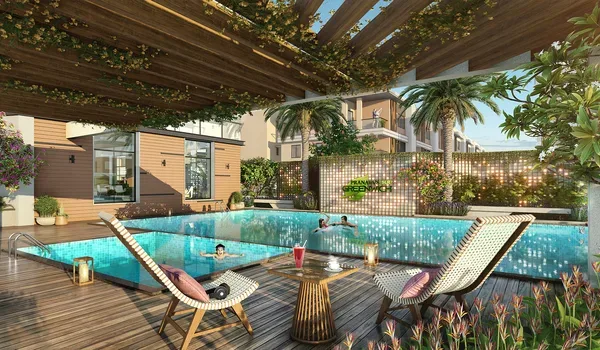
Drought-Tolerant Planting in BPTP Wa Vana Landscape Design
Drought-tolerant planting means plants that cope with dry spells once they are established. Faridabad has hot summers and a monsoon, with cold, dry winters. Plants that suit the region survive better than imported ones that need constant watering.
Good signs on a plant list: native or well-tested trees, groundcovers instead of large lawns, mulch on beds and drip lines for watering. Warning signs: many exotic species that are known to struggle in North Indian summers.
Establishment matters too. Even drought-tolerant plants need watering through their first one to three years. Ask how the first years are covered in the budget, and who is responsible for replacing plants that fail. The green areas and parks that residents can use are described on our parks and gardens page.
Look for the landscape details in the official material.
How to Read the BPTP Wa Vana Landscape Plan
When you receive the master plan or landscape drawing, check these items in order.
| Item | What good looks like | Red flag |
|---|---|---|
| Scale and legend | Clear scale, labelled areas | Only a pretty picture |
| Open space share | Stated as acres or percent | Vague "lots of greenery" |
| Plant schedule | Species, size, count | No list |
| Irrigation | Drip, treated water source | Not mentioned |
| Plot position | Distance to forest shown | Plots not marked |
| Phasing | Dates or milestones | "To be announced" |
Ask for the drawing as a file, not just a view in a meeting, so you can study it at home.
Shared Landscape and Private Plots at BPTP Wa Vana
The developer designs the shared landscape. You design what happens on your plot. Both affect how the community feels.
On shared land, expect the forest, trails, gardens, entry area and street trees. On your plot, you decide how much to pave, how many trees to keep and whether to build a garden. A plot of 280 sq. yards is not large, so the balance between built-up area and green space is a real decision.
Ask whether there are rules on how much of a plot may be built on, boundary wall height or front setbacks. These affect how your house sits next to the common landscape. The way these two layers meet at the street is shown on the Japanese gardens page, which looks at the featured garden types.
Check building and planting guidelines.
Upkeep and Cost Questions for BPTP Wa Vana Landscape
A landscape is a long-term service, not a one-time product. Who looks after it, and how is it paid for?
- Is there a maintenance agency named, and for how long?
- What is the planned maintenance charge, and how is it calculated?
- What happens when the developer hands over to a residents' association?
- Is there a reserve fund for replacing trees and repairing paths?
An illustration only, not a Wa Vana figure: if annual landscape upkeep for a layout came to a fixed sum, the share per plot would be that sum divided by 157, adjusted for plot size. Ask the developer to show the real calculation. Price is on request. *Indicative, subject to developer confirmation.
Gardens that are well designed but badly funded decline quickly. Funding is the single best predictor of how the landscape will look in ten years.
Environmental Benefits of BPTP Wa Vana Landscape Design
Green cover can cool the air, absorb rain, support birds and reduce dust. A dense forest patch and tree-lined streets can make a visible difference to comfort in Faridabad's summer.
These are general benefits of well-planned landscapes. The developer has not published measured data for Wa Vana, such as temperature reduction, tree count or rainwater harvest. We will not claim figures that do not exist. If environmental performance matters to you, ask for the tree plan, the rainwater approach and the treated water plan.
Our Japanese design concept page shows how these landscape features connect with the Ikigai idea and the five philosophies, which is the logic behind the whole layout.
Pricing is on request.
Next Steps on BPTP Wa Vana Landscape Planning
Ask for the landscape drawing, the plant schedule, the phasing and the maintenance model. Visit the site to see the soil, existing trees and surroundings. Compare with other plotted projects and, where possible, visit a completed BPTP community to see how its landscape has aged.
Verify the project registration on the Haryana RERA portal, since the number on the header and on the project page differ slightly. For the wider list of facilities, use our amenities overview. Possession is expected in 2030, and a landscape is rarely complete on day one, so ask what will be ready when.
A short list to carry on your visit
- Photograph the boundary, the trees and the access road, and note the date.
- Ask where the central forest will sit compared with the plots you like.
- Ask which parts of the landscape are in phase one.
- Ask for a sample maintenance charge calculation.
- Ask for every answer in writing.
A landscape plan is easy to admire and hard to check from far away. Taking these steps turns a nice picture into something you can test against real documents and real ground. If the developer shares a dated progress photo set later, compare it with the drawing you were given, and ask about any difference you notice, however small it seems at the time. Small gaps often show how a project is run.
Request the BPTP Wa Vana Landscape Plan
Share your details to ask for the landscape drawing, plant list and phasing. Pricing is on request.
BPTP Wa Vana Landscape Design: Frequently Asked Questions
Short answers to the questions buyers ask most often on this topic.
As per BPTP's announcement, the landscape concept was developed with Coopers Hill, an international landscape firm. Ask the developer who the executing landscape contractor will be and whether the plan has been approved.
It means plants that survive dry periods once established, so they need less watering. Even these plants need regular water in their first years. Ask for the plant list and the irrigation plan to see how this is applied.
A full landscape drawing has not been published. Ask for the master plan and landscape drawing, in file form, with scale and legend. Renderings alone are artistic impressions and not a construction commitment.
Not stated. Possession is expected in 2030, but phasing of landscape works has not been released. Ask which parts, such as the forest, trails and entry, will be complete at handover, and which will follow.
We cannot promise that. Good landscaping can make a place more pleasant, but value depends on location, approvals, demand and market conditions. Treat landscape as a quality-of-life factor and judge price separately.
Talk to a BPTP Wa Vana Property Expert
Tell us what you are looking for and we will share the plot options, current information and a time for a site visit.
- Plot sizes starting from 280 sq. yards
- Indicative price on request
- Brochure when released
- Site visit at a time that suits you
Request a Callback
Share your details and a property expert will get back to you with the current information.