
BPTP Wa Vana Japanese Gardens
The BPTP Wa Vana Japanese gardens are the visual centre of this plotted community in Sector 80, Faridabad. This page explains each garden type named by BPTP, what it means in plain words, how it should be maintained, and which details are still unconfirmed.
Japanese Gardens Announced for BPTP Wa Vana
BPTP describes a central Japanese forest of about one acre inside the 14.95 acre development. Within it and around it, the launch announcement and project page name a set of garden features. The two sources do not match word for word, so the list below combines both and should be confirmed against the approved plan. Everything here is about the japanese gardens side of BPTP Wa Vana, so check the numbers against the developer's papers.
- Zen garden for quiet sitting and raked-gravel style design.
- Koi pond and other water features.
- Bamboo walk and bamboo groves.
- Tea pavilion or tea garden.
- Sakura garden with flowering trees.
- Miyawaki forest of dense, layered planting.
- Reading decks, meditation pavilions and yoga decks.
- Community gardens and shaded seating.
Sizes, positions and opening dates have not been released. Renderings are artistic impressions, and the developer may revise features subject to approvals.
The Zen Garden in BPTP Wa Vana Explained
A Zen garden is a simple, quiet space. Traditionally it uses stones, gravel, moss and a few carefully placed plants. The point is to slow you down, not to impress you with flowers.
In a residential layout, a Zen garden usually works as a pause point. You might walk through it on the way to the forest trail, or sit at its edge in the evening. It needs very little water, which suits a drought-aware landscape plan.
What to ask: how big is it, is it open to all residents at all hours, and who cares for the gravel and plants? Fine gravel and sand patterns need frequent care to look right. In India's dust and monsoon conditions, a poorly kept Zen garden can look neglected quickly.
The overall landscape thinking behind this garden and the rest of the plan is described in the landscape design page.
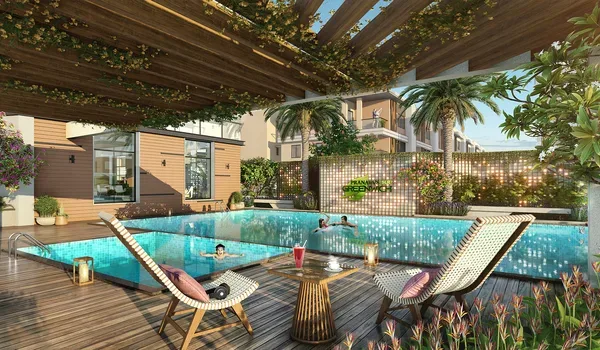
Koi Pond and Water Features at BPTP Wa Vana
The project page names a koi pond. Koi are ornamental carp kept in ponds, and they need clean, aerated water, shade and regular feeding. In North Indian heat they also need protection from very warm water.
Water features look beautiful in renderings. In real life they bring running costs. Pumps, filters, power, water top-ups and skilled staff all add up. Ask whether the koi pond is a living pond with fish or a reflective pool, and who is responsible for it.
Also ask where the water comes from. If treated water is used, ask how it is treated and tested. Faridabad summers lose a lot of water to evaporation, so a sound design uses shade, depth control and recirculation.
See how the water features are shown in the official material.
Bamboo Walk and Miyawaki Forest at BPTP Wa Vana
Bamboo gives quick height, shade and a soft rustling sound. It is a good fit for a Japanese theme, but it spreads, so it should be planted in controlled beds. Ask how the bamboo will be contained and whether the species suits local weather.
A Miyawaki forest is a dense planting method named after a Japanese botanist. Many native trees and shrubs of different heights are planted close together so the patch grows fast and becomes thick. Done well, it cools the air, attracts birds and uses little care after the first few years.
The first two or three years need watering and weeding, and the planting must be well designed. Ask which species are planned and who will monitor survival. Count on a young forest looking sparse at first, since trees need time.
If you expect to enjoy the green cover in the first years after possession, ask for the planting schedule. The developer's wider commitments on parks and tree cover are covered in the green spaces page.
Tea Pavilion and Sakura Garden at BPTP Wa Vana
The tea pavilion, or tea garden, is likely to be a small covered seating area for quiet conversation. It could be where residents meet in the evening. It is a design idea drawn from Japanese tea culture, which values calm and attention.
The Sakura garden refers to cherry blossom. True Japanese cherry trees do not always thrive in North Indian climate, so ask which tree species are planned. Many projects use flowering trees that are similar in look and better suited to the local weather. There is nothing wrong with that, but you should know what is promised.
- Ask if the tea pavilion is open for private bookings or only shared use.
- Ask which flowering trees will be planted, and when they bloom.
- Ask about shade and seating so the spaces are usable in summer.
Confirm the species and phasing.
Maintaining the BPTP Wa Vana Japanese Gardens
Japanese-style gardens look clean because they are cared for often. Prune, rake, clean, repeat. The plan only works if there is a budget and a team.
| Element | Typical upkeep | Question for the developer |
|---|---|---|
| Zen garden | Raking, weeding, stone cleaning | Who does it and how often? |
| Koi pond | Filtration, feeding, water checks | Is there trained staff? |
| Bamboo | Thinning, containing roots | Is it in contained beds? |
| Miyawaki patch | Watering early on, monitoring | What is the care plan for the first years? |
| Flowering trees | Pruning, pest care | Which species? |
Ask how the cost is shared. A common model is a maintenance charge paid by every plot owner. In an illustration only, not a Wa Vana figure, a project with high garden upkeep might pass the cost on at a fixed rate per sq. yard each year. Ask for the actual calculation. *Indicative, subject to developer confirmation.
How to Assess BPTP Wa Vana Gardens Before Possession
No garden photos or construction updates are public. Until they are, use the documents and a site visit.
- Ask for the landscape drawing with scale, not just a picture.
- Ask for the phasing, since gardens are often among the last works completed.
- Visit the site and note its present condition, soil, trees and access.
- Compare against other BPTP projects, if you can visit one, and look at how the landscaping is kept years after completion.
- Check the RERA entry on the Haryana RERA portal.
If you are thinking about the gardens as part of your decision, read how they fit into the overall Japanese design concept, which covers the five philosophies and the central forest.
See the land and ask about the garden plan.
Mistakes to Avoid With BPTP Wa Vana Garden Promises
It is easy to fall for a beautiful picture. A calmer approach protects you.
- Treating a rendering as a construction commitment.
- Assuming all garden features arrive at possession in 2030.
- Ignoring who pays for maintenance of ponds and bamboo groves.
- Expecting an exact Japanese plant palette in a North Indian climate.
- Choosing a plot without checking how far it is from the forest.
The wider facility list is on the amenities overview, so you can see which features are garden-based and which are practical, such as roads, security and utilities. Price is on request and plot-wise availability is not published. When in doubt, ask the sales team for the answer in writing and keep it with your booking papers.
Ask About the BPTP Wa Vana Japanese Gardens
Request the landscape plan and phasing, and ask which garden features come first. Pricing is on request.
BPTP Wa Vana Japanese Gardens: Frequently Asked Questions
Short answers to the questions buyers ask most often on this topic.
BPTP names a Zen garden, koi pond, bamboo walk, tea pavilion, Sakura garden and Miyawaki forest, along with meditation pavilions and yoga decks. Some are named only on the project page, so confirm each against the approved plan.
The developer states the central Japanese forest is about one acre inside a 14.95 acre project. Sizes of individual gardens have not been released. Ask for a landscape drawing with dimensions.
True Japanese cherry trees may struggle in Faridabad's climate. The developer has not published the species list. Ask which flowering trees are planned and when they bloom, so you know what to expect.
Not announced. Plotted projects usually pass upkeep to a maintenance body funded by plot owners. Ask for the maintenance terms, the budget approach and how the charge is calculated before you book.
Only artistic renderings are available. No construction or finished garden photos have been released. Ask the developer for dated site photos as work begins, and visit the site yourself.
Talk to a BPTP Wa Vana Property Expert
Tell us what you are looking for and we will share the plot options, current information and a time for a site visit.
- Plot sizes starting from 280 sq. yards
- Indicative price on request
- Brochure when released
- Site visit at a time that suits you
Request a Callback
Share your details and a property expert will get back to you with the current information.